Is Homebirth Right for You?
Essentially one of the main reasons more women and families choose not to birth at home is due to fear and not being educated that homebirth is an option for them. The only time many of us have witnessed out-of-hospital birth is in watching old movies where the timeline exists prior to modern technological advancements or in one of those rare occasions where the baby comes so quickly the mother couldn’t get to the hospital fast enough. Both of which seem terrifying on screen. With the surge of online information centered around different birthing options, many women are starting to view homebirth as normal and are even entertaining this idea. So, how do you know if homeirth is right for you?
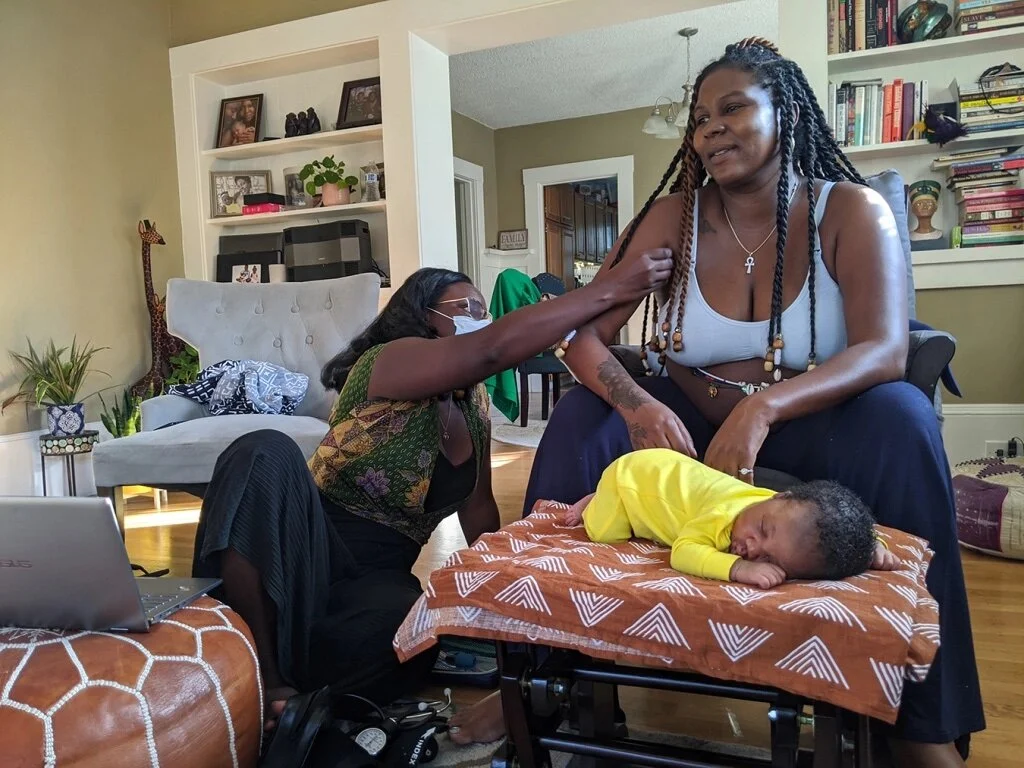
photo credit: Rachel Scheier
I’ve outlined a list of things that those seeking a positive birth experience may want to know. In comparison to the most-known hospital birth, birthing at home is both more flexible and more fulfilling. Go through this list and note what is important to you.
No monitors means no movement restrictions. There is no need to closely monitor a healthy baby. In hospitals the mother is usually restricted to the bed in order for the monitor to get an accurate reading which means no walking, no bath/showers and no getting out of bed unless you have to use the restroom. At home, there are no monitors which means a mother can work with gravity to pull her baby down and this cuts down on time in labor.
You can eat and drink all you want. Laboring women are not allowed to consume any food or drink as a safety precaution just in case a woman has to go into surgery (i.e. emergency c-section) and must be put under anesthesia. The fear has been that a woman can choke while under anesthesia on her own vomit and possibly die. However, we have technological advancements that no longer merit this kind of precaution. Women are awake during these procedures and can communicate their needs or simply lean their head over to expel the vomit. At home, this isn’t even a factor. If a person is transferred from their home to a hospital, the last thing the staff will do is deny someone of an emergency surgery simply because they had pizza an hour ago. So, eat what you want. You’ll need that food for energy to give birth!
You can have a waterbirth. You may want to labor and even birth in the water, but some hospitals don’t have bathtubs in the room and some just don’t allow it. At home you can labor and birth in the bathtub if you want which I highly encourage. Water is very soothing and helps to cope with contractions. It’s also easier to clean up.
You can labor as long as you need to. Depending on how busy the L&D unit is at a hospital, your doctor may need to put in an order for medication to speed up the labor process so that the next person who comes in to deliver will have a room. This is called “intervention”, which can lead to more complications down the line. There are many reasons hospital staff rush the process which unless it is medically necessary, this should never happen. At home, you are not on a clock and there’s nobody in labor and delivery except you. This means all of the attention is on you. You’re the star of the show which ensures that you receive personalized care.
You can do it alone or with help. For some having no professional help might seem scary. For others, this might be just what they need. Unassisted birth usually involves the birthing family and close loved ones if they choose to be present during labor and delivery. An assisted birth usually involves a Midwife and Doula in addition to those mentioned above. There are no stipulations around who will be present in your home. You get to decide.
You create the vibe in your space. Together with your Midwife and Doula, you can create the rules and set the mood. If you’re having an unassisted birth, you can do this yourself or with a partner. Consider making your own birth playlist or downloading mine here. Other things to consider when creating the vibes is aromatherapy, lighting, equipment such as a peanut or birthing ball, video camera setup or hiring a professional person to capture the moment for you.
No strangers on the birth team. I’ve witnessed from 4 to 8 staff members in a room during delivery at a hospital. You may get the names of three of them; two nurses and the doctor. You really don’t know who’s behind those masks. At home, you’ll know everyone because you would have invited them there. This undoubtedly helps the mother to feel safe and secure so that she’s focused on doing her job. Birthing!
Quality time with baby and loved ones uninterrupted. The golden hour is highly recognized in all birth spaces. However, interruptions for testing and questioning still take place. When at home, this is less likely to happen. You can love on your little one for as long as you like and share them with your loved ones as soon as you see fit.
Rituals are honored. When birthing at home, you have no issues with delayed cord clamping, placenta encapsulation or lotus birthing processes. Some families from different countries like to have ceremonies once the baby is born. These ceremonies go inhibited with a homebirth. Things are much slower at home, so a mothers wishes tend to be easily met.
No interventions. The monitors mentioned above are considered an intervention. Receiving and IV fluid is also an intervention. Pitocin to speed up contractions, inducing labor and rupturing the membranes are all interventions that interfere with the natural course of labor and delivery. Sometimes these interventions are beneficial, and sometimes they do more harm than good. There’s no way to know this until it happens. When birthing at home, most times there are no interventions. This is something to discuss with your midwife beforehand just to be sure.
Back-up plans. All Midwives have a hospital they partner with in case a mother needs to be transferred. There’s no reason to fear. If medically necessary your body, intuition and professional birth team will have your back and get you the help you need. If having an unassisted birth, make sure to think things through and include a back-up plan inside of your birth plan.
Homebirthing isn’t a new practice. It’s been around since the beginning of time. Now, we are simply returning to those practices due to the climate we are all living in. These are just a few of the things to consider when deciding on the kind of birth you’d like to have. A homebirth experience is empowering and can leave a woman feeling like she did birth her way after the big event is over. If you have more questions about homebirth and are looking for a doula to accompany you, no matter what kind of birth you choose you can reach me here for a consultation.
If you’ve already had your own homebirth experience, I’d love to hear about it. Leave a comment or share your birth story with me personally via email at theurbanumi@gmail.com.
